Picking an exterior paint color in Florida is not just about taste. It’s also about heat, sun, and humidity. With Florida averaging 230+ sunny days per year, your exterior paint has to handle direct sun exposure, UV exposure, wind, rain, and mildew pressure. That is why the best exterior paint colors Florida homeowners choose in 2026 tend to be lighter, cleaner, and easier to maintain.
Below are color trends that look great on Florida homes, plus practical tips to help your exterior house stay sharp longer.
What’s trending in 2026 for Florida exteriors?
In 2026, the most popular exterior house colors lean into bright, livable neutrals with a few coastal accents. You will see:
- Warm whites and creamy neutrals (high curb appeal, classic look)
- Soft neutrals like greige, taupe, and accessible beige
- Soft grays and warm grays (not icy, not too dark)
- Earth tones and muted greens that blend with natural surroundings
- Coastal blues used as accents, not usually as the main body color
These trends show up across Florida exteriors, from stucco to siding to brick. They also fit many HOA palettes, which is helpful if you live in a regulated neighborhood.
Climate first: why color choice matters in Florida’s climate
Here’s the part many people learn the hard way. Dark paint absorbs more heat, which can stress the coating and the surface underneath. In summer, dark colors can exceed 160°F on exterior surfaces. Light colors can be 20–30 degrees cooler than dark colors, so they tend to hold up better.
This is not just a comfort issue. Citing federal energy research, Allstate’s home guide notes that dark, dull colors “can absorb 70 to 90 percent of the sun’s radiant energy,” while light surfaces reflect it away — which is exactly why lighter Florida homes stay cooler and their paint lasts longer.
— Source: Allstate, “Does a Home’s Color Affect the Temperature Inside?”
If you want maximum color life, aim for a body color Light Reflectance Value (LRV) in the 55–80 range. Colors with LRV 55-80 reflect enough solar energy in Florida to reduce thermal stress and help with color retention. Lighter and medium-light colors tend to last longer in Florida’s climate.
In Florida, a lighter body color isn’t just a style choice — it’s a durability choice. The same shade that stays cooler in the sun is also the one that fades and stresses the least over the years.
Humidity matters too. In Tampa Bay, humidity averages around 74%, and similar conditions across the state drive mildew risk. That is why your product choice matters just as much as your exterior color.
The best exterior paint (products) for Florida homes
Even the best palette will struggle if the paint is not built for harsh weather conditions. For performance, many homeowners and pros lean on these options:
- Benjamin Moore Aura Exterior offers superior fade resistance.
- Sherwin-Williams Emerald Exterior is formulated for extreme fade resistance.
- Element Guard® protects against various weather conditions.
- Acrylic latex paints are recommended for Florida’s humid climate.
- Satin or eggshell finishes are best for Florida exteriors (they shed dirt better than flat, but do not highlight surface texture like glossy finishes).
If you want durable exterior paint, look for UV stabilizers, mildew resistance, and high quality exterior paint designed for intense sunlight and constant moisture.
The perfect Florida color on a bargain paint is still a short-lived paint job — in our climate, the product you choose has to be as thought-through as the shade.
Best exterior paint colors Florida homeowners should consider in 2026
These suggestions work across many home styles and neighborhoods. They also pair well with common roof colors and landscaping.
1) Warm whites + white trim (timeless and forgiving)
A warm white body with white trim is one of the safest choices for Florida. It reflects heat, hides dust better than pure bright white, and looks clean even after a long dry season.
Try options like warm white, cream, or off white. A popular benchmark is White Dove (often referenced in benjamin moore color decks) for a soft, lived-in white.
Great for: stucco, contemporary homes, coastal, and traditional homes.
2) Soft grays and warm grays (modern without looking cold)
Gray can look harsh in bright sunlight if it has a blue base. Shades of gray with warm undertones avoid a cold look in bright sunlight. Think warm grays, greige, and charcoal gray used carefully.
Tip: If you love charcoal gray, consider using it on shutters, accents, or the front door instead of as the main body color.
3) Muted greens and sage (blends with Florida’s natural landscape)
Green colors blend perfectly with Florida’s natural landscape. Muted greens and sage tones pair nicely with stone, wood details, and tropical foliage. Earth tones and muted greens resist fading better in Florida, which is a big win for maintenance.
4) Coastal blues (best as accents)
Blue tones reflect coastal surroundings but should be used with restraint. In most cases, coastal blues look best on doors, shutters, or porch ceilings rather than the whole house—especially if the home gets direct sunlight all day.
Don’t forget the door color (it does more than you think)
Your door color is the easiest way to add personality without committing to a bold body color. If your HOA leans neutral, a statement door can still give you the “wow” factor.
Popular choices for 2026 include:
- Deep navy (a more controlled take on coastal blues)
- Pure black (clean and modern, especially with warm white)
- Bright coral or bright yellows for a tropical accent (best when allowed and used in small doses)
Pro tip: Colors appear 2–3 shades lighter outdoors than indoors in Florida because the light is so strong. Always test first.
Coordinating garage doors, trim color, and shutters
A polished exterior house usually uses three to four colors total: body color, trim color, and one or two accents. That might include shutters, a front door, and garage doors.
Simple rules that keep things looking intentional:
- Match garage doors to the body color if you want them to “disappear.”
- Match garage doors to trim if you want them to feel crisp and framed.
- Keep the trim color consistent across fascia, window trim, and railings.
- Use accent colors on shutters and doors to highlight architectural details.
Design editors give the same starting point. HGTV advises that when you build a front-of-house palette, you should “take a cue from your surroundings” — letting your roof, landscaping, and nearby homes guide the door and shutter colors so the whole exterior reads intentional.
— Source: HGTV, “20 Front Door + Shutter Color Combos We Love”
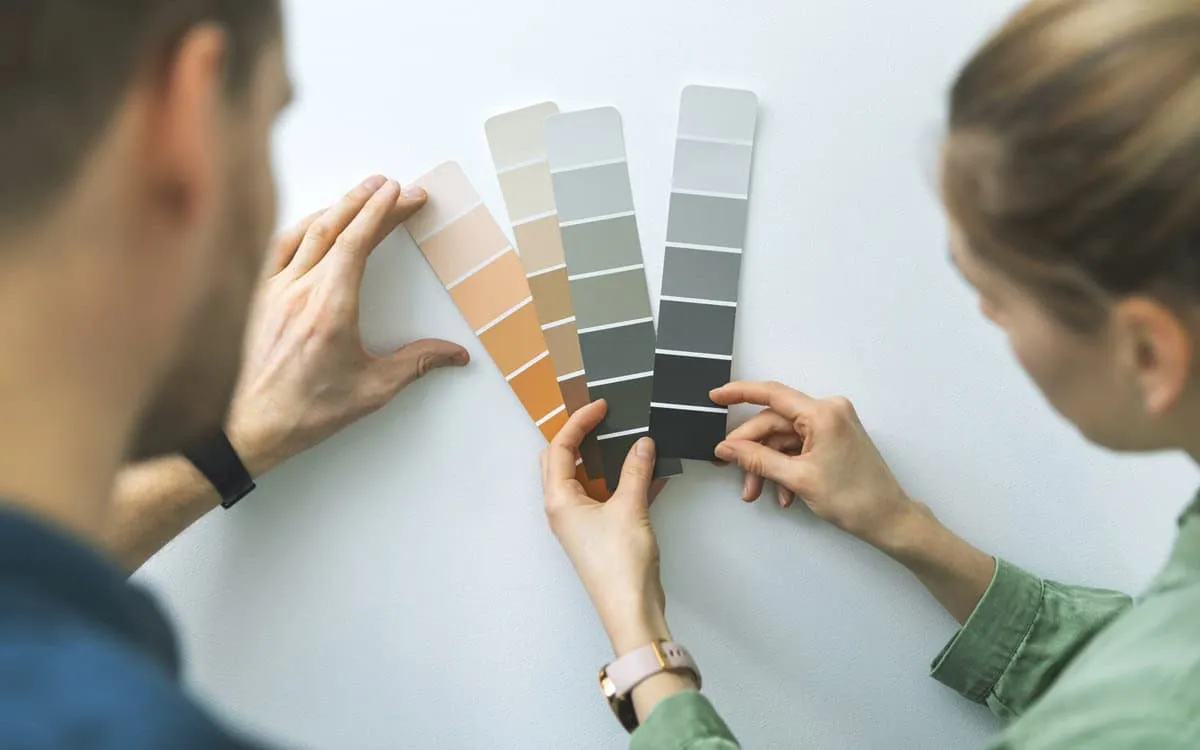
This is also where paint samples matter. Get paint samples (or color samples) and check them in morning sun, late-day sun, and shade before committing.
Choosing exterior paint colors with HOA rules in mind (Tampa Bay note)
If you live in a community near Tampa Bay, HOA color selection is often regulated. Westchase HOA requires color approval before painting, and many Tampa Bay HOAs favor neutral, earth-tone palettes. HOA guidelines often reject bold or unconventional colors.
To avoid delays:
- Submit paint samples for HOA approval before painting.
- Keep a backup choice ready in case your first pick is denied.
The 2026 palette and most HOA rulebooks want the same thing — livable, earthy neutrals — so staying on-trend and staying approved usually point you toward the very same colors.
Quick checklist: choosing exterior paint colors that hold up best
When homeowners ask us how to pick the right exterior paint color, this is the practical shortlist:
- Favor lighter shades to reflect heat and reduce fading
- Pick a body color with LRV 55–80
- Use premium, climate-rated coatings (not bargain paint)
- Choose satin or eggshell sheen for easier cleaning
- Test paint samples outdoors (sun and shade)
- Plan for trim, shutters, garage doors, and door color together
That LRV rule of thumb is well established. Bob Vila’s climate guide, quoting a Benjamin Moore technical expert, explains that light colors with an LRV above 55 “will tend to reflect light” — a real benefit “in warmer climates when you are trying to keep the inside of your home cool.”
— Source: Bob Vila, “The Best Exterior House Paint Colors for Hot and Cold Climates”
Choosing exterior paint colors in Florida requires balancing aesthetic appeal and climate durability. The best exterior choices do both.
Want help picking the best exterior colors for your home?
“The color that wows you on a two-inch chip can look completely different across a whole Florida wall in full sun. We help homeowners test real samples on their actual home, in morning and afternoon light, and weigh in on how each shade will hold up — so you choose once and love it for years, HOA and all.”
— The team at Make It Happen Painting
If you are narrowing down the best exterior paint colors Florida has to offer for 2026, we can help you choose a palette that fits your personal style, your neighborhood, and Florida’s climate. We also help you pick the best exterior paint system for long wear and color retention.
Call (352) 277-1115 to talk through options, get guidance on paint samples, and plan your next fresh coat with confidence.